
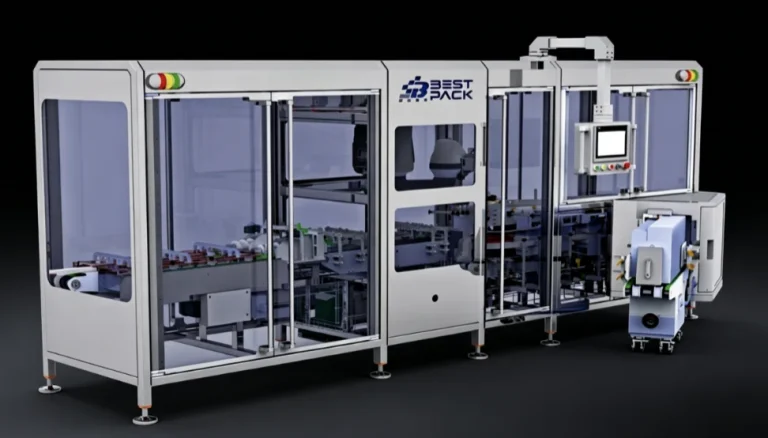
Why Fresh Food Producers Need Automated Case Forming
Fresh food manufacturers face unique packaging challenges. Products must move quickly from production to distribution while maintaining freshness and minimizing handling.
Whether packaging:
- Fresh vegetables
- Fruit products
- Salad kits
- Chilled meals
- Ready-to-eat foods
efficient case forming is critical to maintaining productivity.
This is why many companies are investing in customized vertical loading case formers.
What Is a Vertical Loading Case Former?
A vertical loading case former automatically erects flat corrugated cartons into shipping-ready cases.
The machine performs:
Case Picking
Flat blanks are automatically picked from a magazine.
Case Forming
Cases are opened and squared.
Bottom Sealing
Tape or hot melt adhesive secures the case base.
Case Transfer
Finished cases move to product loading stations.
This process eliminates manual carton assembly and improves packaging consistency.
Benefits for Fresh Food Packaging
Increased Production Speed
Automatic case formers operate continuously, supporting high-volume production environments.
Improved Packaging Consistency
Every case is formed to precise specifications, reducing packaging failures during transportation.
Lower Labor Requirements
Automation reduces repetitive manual work and helps address labor shortages.
Enhanced Food Safety
Less manual handling contributes to improved hygiene and operational cleanliness.
Why Customization Matters
Fresh food products often vary significantly in:
- Package size
- Product weight
- Carton dimensions
- Production speed
Customized case formers allow manufacturers to optimize performance for specific packaging requirements.
Integration with Automated Packaging Lines
Case formers are frequently integrated with:
Upstream Equipment
- Cartoning machines
- Weighing systems
- Product conveyors
Downstream Equipment
- Case packers
- Case sealers
- Palletizers
The result is a fully automated end-of-line packaging solution.
Selecting the Right Case Former Supplier
Manufacturers should consider:
Production Capacity
The system must support current and future output requirements.
Changeover Efficiency
Fast format changes improve flexibility for multiple product lines.
Maintenance Support
Reliable service minimizes production interruptions.
System Scalability
Equipment should accommodate future expansion plans.
Conclusion
Customized vertical loading case formers provide fresh food manufacturers with a reliable way to improve packaging efficiency, reduce labor costs, and support automated production environments. As demand for fresh and convenience foods continues to grow, automated case forming technology remains a key component of modern packaging operations.