
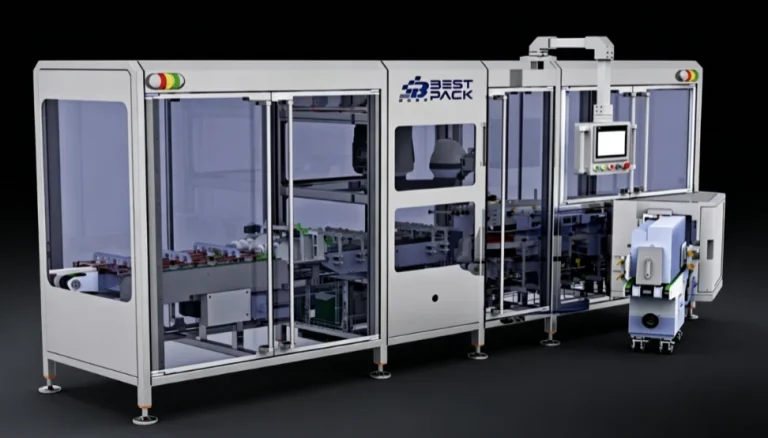
Why Beverage Manufacturers Depend on Shrink Packaging
The beverage industry is one of the largest users of secondary packaging equipment worldwide. Every day, millions of bottles, cans, cartons, and beverage containers move through production facilities before reaching supermarkets, wholesalers, and consumers.
For beverage manufacturers, packaging is not only about protecting products. It also plays a vital role in transportation efficiency, retail presentation, warehouse handling, and brand visibility.
As production volumes continue to increase, manufacturers require packaging systems that combine high speed, reliability, and cost efficiency. This is why thermal shrink wrapping equipment has become one of the most widely adopted solutions in modern beverage packaging operations.
From bottled water and soft drinks to juices and dairy products, shrink packaging technology provides a practical and economical method for creating secure multipacks.
What Is Thermal Shrink Wrapping Equipment?
Thermal shrink wrapping equipment is a packaging system that uses heat to shrink plastic film tightly around products.
The packaging process typically involves:
- Product collation
- Film wrapping
- Sealing
- Heat shrinking
- Cooling and discharge
Once exposed to controlled heat inside a shrink tunnel, the film contracts and forms a tight package around the grouped products.
This creates a stable and secure bundle that is suitable for transportation, storage, and retail display.
Modern shrink wrapping systems are designed to operate continuously, making them ideal for high-volume beverage production environments.
Common Beverage Products Packaged with Shrink Wrapping Systems
Shrink packaging technology supports a wide range of beverage products.
Bottled Water
Perhaps the most common application, bottled water manufacturers frequently package products in:
- 6-pack bundles
- 12-pack bundles
- 24-pack bundles
Shrink wrapping provides excellent stability while minimizing packaging costs.
Carbonated Soft Drinks
PET bottles and aluminum cans are often grouped using automatic sleeve wrappers and shrink bundling machines.
These systems provide secure packaging that withstands transportation and retail handling.
Juice Products
Shrink packaging protects juice bottles and cartons while creating attractive retail-ready multipacks.
Dairy Beverages
Milk drinks, yogurt beverages, and nutritional drinks often require stable secondary packaging for distribution through cold-chain logistics.
Why PE Shrink Packaging Is Popular in Beverage Applications
Most beverage manufacturers utilize PE shrink packaging systems due to the unique properties of polyethylene film.
Superior Strength
PE film offers excellent durability and puncture resistance, making it ideal for heavy products such as bottled beverages.
Transportation Stability
Multipacks remain secure throughout:
- Warehousing
- Distribution
- Retail handling
Cost Efficiency
PE film typically offers a lower packaging cost compared with corrugated cartons and trays.
High-Speed Compatibility
PE shrink film performs exceptionally well on automated packaging lines operating at high production speeds.
These advantages have made PE film the preferred packaging material for many beverage manufacturers worldwide.
Automatic Sleeve Wrappers for Beverage Production
Among various shrink packaging solutions, the automatic sleeve wrapper remains one of the most widely used machines in beverage packaging facilities.
How Sleeve Wrappers Operate
Products are grouped together and wrapped with a sleeve of shrink film.
The package then passes through a shrink tunnel where heat forms the final bundle.
Key Advantages
Automatic sleeve wrappers offer:
- High packaging speed
- Stable operation
- Low maintenance requirements
- Flexible pack configurations
These systems are particularly effective for large beverage production facilities seeking maximum productivity.
Shrink Bundling Machines for Secondary Packaging
A shrink bundling machine is designed specifically for grouping multiple products into transport-ready packages.
Typical bundle configurations include:
Bottle Multipacks
- 6 bottles
- 12 bottles
- 24 bottles
Can Multipacks
- Soft drink cans
- Energy drinks
- Beer alternatives
- Sparkling water
Carton Multipacks
- Juice cartons
- Dairy beverage cartons
- Tetra Pak products
Shrink bundling improves logistics efficiency while reducing packaging material consumption.
Benefits of Thermal Shrink Wrapping Equipment
Reduced Packaging Costs
Compared with traditional carton packaging, shrink wrapping often requires less material.
Manufacturers can lower packaging expenses while maintaining product protection.
Improved Logistics Efficiency
Shrink bundles occupy less space and are easier to handle during transportation and storage.
Excellent Product Visibility
Transparent film allows consumers to clearly view products, supporting retail merchandising strategies.
Flexible Packaging Formats
Manufacturers can quickly adjust package configurations to meet changing market demands.
Increased Automation
Modern shrink packaging equipment integrates easily with automated production lines, reducing labor requirements.
Integration with Beverage Packaging Lines
Today’s beverage facilities operate highly automated production environments.
Shrink wrapping equipment is commonly integrated with:
Upstream Systems
- Bottle filling machines
- Capping machines
- Labeling systems
- Date coding equipment
Downstream Systems
- Checkweighers
- Case packers
- Palletizers
- Warehouse automation systems
This integration creates a seamless packaging process that maximizes productivity and minimizes manual intervention.
Sustainability and Modern Shrink Packaging
Sustainability is becoming increasingly important within the beverage industry.
Packaging equipment manufacturers are responding with innovations that reduce environmental impact.
Reduced Film Consumption
Advanced film control technologies minimize material usage while maintaining package integrity.
Recyclable Packaging Materials
Many modern PE films can be collected and recycled through established recycling programs.
Energy-Efficient Shrink Tunnels
New-generation shrink tunnels consume less energy while delivering consistent shrink quality.
These improvements help beverage producers achieve sustainability goals without sacrificing packaging performance.
How to Select the Right Beverage Packaging Equipment
When evaluating shrink packaging systems, manufacturers should consider several factors.
Production Capacity
Packaging speed requirements directly influence machine selection.
Product Dimensions
Bottle size, can size, and multipack configuration determine the appropriate packaging solution.
Film Type
PE film specifications affect packaging performance and material costs.
Future Expansion
Manufacturers should choose equipment capable of supporting future growth and increasing production demands.
Working with an experienced beverage packaging equipment manufacturer helps ensure the best long-term investment.
Future Trends in Beverage Shrink Packaging
The next generation of shrink packaging systems will focus on:
Smart Manufacturing
- Real-time production monitoring
- Remote diagnostics
- Predictive maintenance
Greater Automation
Fully automated packaging lines continue to replace manual processes.
Sustainable Packaging Solutions
Manufacturers increasingly seek recyclable materials and reduced packaging waste.
Flexible Production
Packaging systems are being designed to accommodate a broader range of package sizes and promotional formats.
These trends will continue shaping the future of beverage packaging technology.
Conclusion
Thermal shrink wrapping equipment has become an essential component of modern beverage packaging operations. By combining cost efficiency, packaging strength, flexibility, and automation, shrink wrapping systems help manufacturers improve productivity while maintaining excellent product protection.
Whether packaging bottled water, soft drinks, juices, or dairy beverages, automatic sleeve wrappers and shrink bundling machines provide reliable solutions for creating secure and attractive multipacks. As demand for efficient secondary packaging continues to grow, thermal shrink packaging technology will remain a key driver of success in the beverage industry.